
Section outline
-
MaaS scope
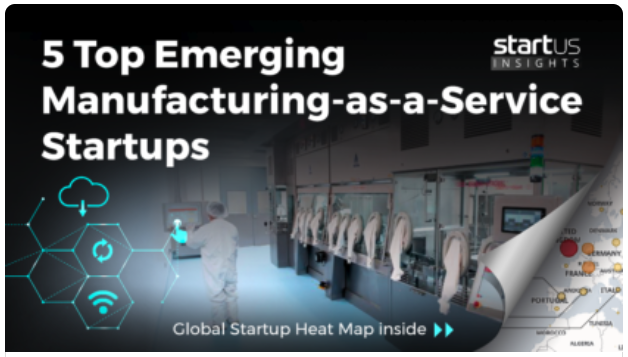
Manufacruring_as_a_Service (MaaS) is a recent topic of industry evolution strongly related to similar attempts of the past of industrialization. The most prominent evolutionary link is with the Virtual Enterprises launched in the late 1980's. Another important characteristic of MaaS is its strong relation with the academy and the studies toward Industry 4.0 (I4.0) and its practical impact, which is also linked with I4.0 through digital transformation (in the digitalization phase) with the IIoT. The perspective from the academy does not conflict with the market view (https://www.rtinsights.com/manufacturing-as-a-service-production-without-owning-machines/), including the possibility of encouraging emerging tech startups (https://www.startus-insights.com/innovators-guide/5-top-emerging-manufacturing-as-a-service-maas-startups/). However, there is a discomfort to look at this two (or three) different viewpoints as different aspects. At the same time, so many connections are quite evident. Of course, all aspects (including the tech startup view) are complementary and equally important.
The proposal of this discipline is to practice a viewpoint collapsing (as in a system design project) to integrate all aspects and dimensions to better understand MaaS as roadmap support to reach I4.0, as a collaborative approach to distribute production - leading the digital transformation, and as a reference to the work with tech startups, treated at the same level than cyber-physical system (CPS).
Online Classes Online classes will use Google Meet. The link will appear in the scope of each module, at least 24 hours before.Classes will begin on March 10 (Tuesday). -
Welcome to PMR5414, where we will discuss the concept of manufacturing_as_a_ service (MaaS) as it appears and how it become so important to reach the Industry 4.0 stage for all industrial segments. MaaS is an evolution of Flexible Manufacturing Systems, and flexibility has been a target since the 1980s. The evolution of this manufacturing approach tried to enhance flexibility within the manufacturing plan (allowing it to "serve" several manufacturing production processes) and along the value chain by enhancing collaboration among several manufacturing units to compose a new manufacturing process.

In this course, we will explore internal flexibility—extended to a vertical integration dimension—and value chain flexibility—extended to a horizontal integration dimension. Besides the initial digitalization phase, an absolute I4.0 production unity should be able to combine and treat both ambidextrously.
-
The page describes and displays basic information about the course.
-
Guide from the International Council on Systems Engineering (INCOSE)
-
Pulkoltil, T. and Estrada-Jimenez, L.A. and Rehman, H.U. and Mo, F. and Nikghadam, S. and Barata, J., Agent-basedmanufacturing—review and expert evaluation, Int. Journal of Advanced Manufacturing Technology, 127, 2023, doi https://doi.org/10.1007/s00170-023-11517-8
-
-
Upload you position paper (2 pages, in PDF) presenting your position about the first module on service-oriented manufacturing and the basic issues contributing to manufacturing-as-a-service.
-
-

Digital Transferrence is a tendency that emerged in this century, aggregating process digitization to a service-dominant approach. Some authors claim that this tendency further developed the servitization concept, preconizing the addition of service to generate more value in goods \cite{Vandermerwe1988}. This start introduced services as addicional value to products as a separate feature, frequently developed after manufacturing, and evolved to a digitalization approach, following the maturity model presented by ACATEC \cite{Schuh2020}. Such a process reaches its top level (apex) by migrating automation processes to the cloud, composing the cloud manufacturing approach. Therefore, it is crucial to understand this process and its risks before going to an actual migration toward I4.0 and to manufacturing\_as\_a\_Service.
In this lecture, we will review the current achievements in cloud manufacturing and the tendencies for the near future, especially the proposition to treat services in the process: cloud manufacturing services (CMfgS).
-
Sub-lecture 2

In our sub-lecture we will explore a little deeper the foundations and concepts of cloud manufacturing and specially from cloud manufacturing services (CMfgS) and give some short examples on how to manage and make projects to (even if simple) to organize virtual manufacturing systems and also the edge computing level.
-
Practical Presentation 2
The second practical presentation concerns cloud manufacturing and Cloud Manufacturing Services (CMfgS). As before, we will revise the concepts shown in Lecture 2 and complemented in Sub-Lecture 2, but with a more practical concern: looking at the implementation issues. Therefore, we will justify using the cloud as the alternative to obtain flexibility and interoperability, stressing the matching between those concepts. Beyond the implementation concerns, this matching will also inspire the look for a design strategy to go from I3.0 toward I4.0 and I5.0.
This lecture also contains a brief discussion about the subject of Module 2. In the first module, we used a quiz. Now, we will try a different approach: each one should think about doubts and questions and will have the opportunity to present them at the end of the class, generating a general discussion. It will be more than just a question-and-answer. We expect everyone's participation.
-
Submit a position paper of at most two pages declaring your position feelings and doubts about what we have seen in the course so far. The submission must be in PDF.
-
Tao, F., Zhang, H, Liu, A., and Nee, A.Y.C.; Digital Twins in Industry: the state-of-the-art, IEEE Trans. on Industrial Informatics, 15,4,2019.
-
Grieves, M., Digital Twins: Manufacturing excellence through Virtual Factory Replication, white paper.
-

After integrating the concept of service manufacturing and cloud manufacturing, receiving the demand to implement system services in the cloud, we now advance to a central problem: how to model and design such systems. The current design challenge was enhanced by the concern with flexibility and interoperability, leading to questioning the use of traditional design methods. The primary approach is to go for systems design, and especially to Model-Based System Engineering. However, this consolidated design process is functional and does not include the design of services, demanding some adaptation. The first drawback will be addressed by introducing a Goal-Oriented approach, mainly for the requirements phase (GORE-Goal-Oriented Requirements Engineering). The KAOS method will be pointed out as a good candidate, but it also has a drawback: it was developed for software systems only, not for systems in general. In this class, we highlight the advantages of using, for instance, the support of KAOS to design System Service, and will elaborate on the drawbacks in the next class.
-
MaaS Systems Design methods

We devised a target system in the previous modules: a cloud environment framework to model and design a distributed manufacturing based on services. We also model process operations to manufacture a product/service and manage their value co-creation. It looks like a very ambitious goal (and it is), but it is also why MaaS design would need new methods and approaches, instigating the academy and current research. On the other hand, finding new methods and developing design frameworks are key issues for the market, which is eager to find sound pathways toward I4.0 and I5.0.
In this class, we will seek a more comprehensive understanding of this problem, its dimensions, and complexity and discuss some alternatives to methods and approaches for MaaS design.
-
Aljahdali, S., Bano, J., Hundewale, N.; Goal-Oriented Eng. - A Review. Int. Conf. on Computer Appl. in Industry and Engineering, 2011.
-
-
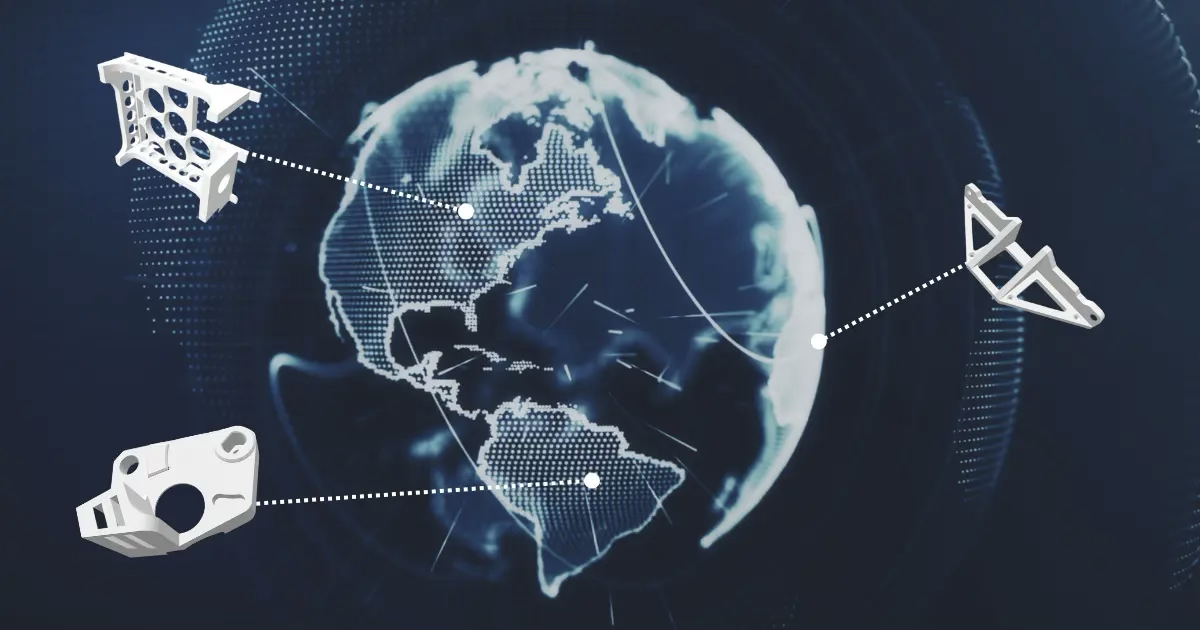
In this lecture, we will address the practical issues and technological barriers to implementing a design framework in the cloud. Such a system is absolutely necessary to address the complexity inherent to the design of MaaS, which, due to its intensive innovation cycle, demands frequent changes to adapt to the ecosystem surrounding business applications.
-
-
-
-
We reached our final goal: to apply the concepts discussed before to the main problem of designing a Digital Transformation toward I4.0. The process is interpreted as a planning (in the sense of Artificial Intelligence Automatic Planning), starting from a clear identified start point (eventually I3.0) and going to wherever possible, close to a full I4.0 model. Given the company's maturity and readiness, the uncertainty in the final point relates to reducing risks, aiming to reach a prohibitive point. In this class, we will pose the general problem and a research agenda for digital transformation, starting with the required characteristics of formal methods to treat Digital Transformation.
-
Gong, C. and Ribiere, V.; Developing a Unified Definition of Digital Transformation, Technovation, 102, Elsevier, 2021.
-
As expected, we reached the course's final module, merging all the concepts, methods, and techniques discussed in the previous modules to find a design approach capable of delivering a strategic plan to bring a company to an I4.0 stage. Therefore, we are not close to a direct implementation, which is not surprising, treating with original academic topics.
On the other hand, we need to mature the discussion and the concepts in this scope. Otherwise, the study will not be useful in practice. We are dealing more with mindset than developing new skills, but we cannot neglect the search for a new posture and attitude facing the digital transference challenge. This is why we launched this chat. You can post questions, opinions, and uncomfortable feelings, and we will discuss them freely. Let us start!
-
Describe what is your position and comments about the Module 3 of the course. Position papers must have up to two pages only.
-
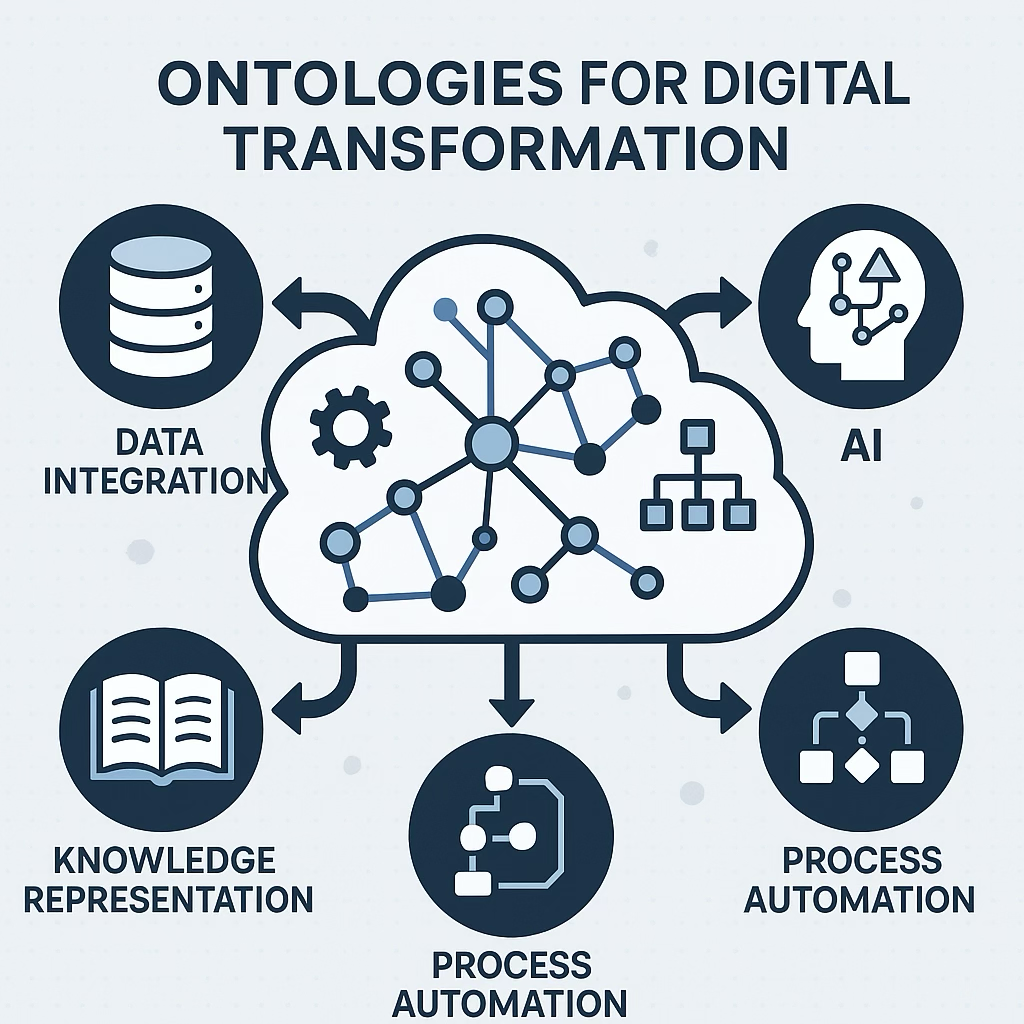
Continuing our lecture on Digital Transformation and its strategic process, we will introduce the data space components. As pointed in the last class, digital documentation based on data spaces is the core of the digital transformation process. Data Spaces became a world tendency for any automated system, including MaaS. International Data Space Association was launched in 2022, aggregating companies, financial marketing, developers, and academia. In the same year, the European Community launched the Data Space Support Centre (DSSC) to apply efforts to introducing data space into the public sector. However, the important for us is the role of data space as the infrastructure to design digital transformation processes to achieve a MaaS that fits the requirements of I4.0.
-
The Practical Challenge of Digital Transformation
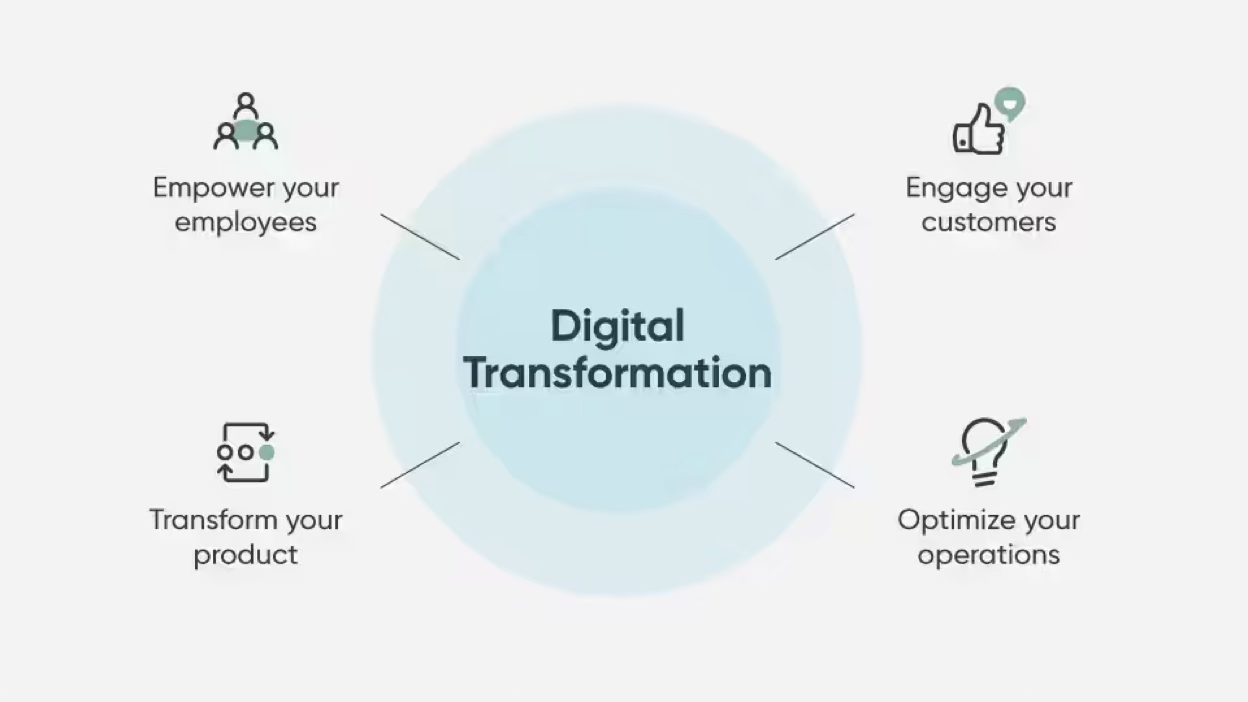
We reached the end of the course, composing all the concepts into a design proposition for a roadmap to a target company on its way to I4.0. As discussed before, the final state could be any of the maturity levels presented by ACATECH (not necessarily the last one), depending on the technology and business maturity of the demanding company and its position in the ecosystem. Technological and business aspects should figure in equal conditions to compose the company's goals.
The method is ambidextrous and seeks horizontal and vertical integration and a higher level of interoperability. In this last class, we also intend to clarify the role of AI and its matching with a data-oriented approach, which was presented in the last class.
-
This is a forum to discuss the preparation of the final paper. We will be open to talk about propositions and their implementation to support the article.
-
-
